My Stories for You
The Defeat I Won in Manila
Act I: The Scent of Opportunity
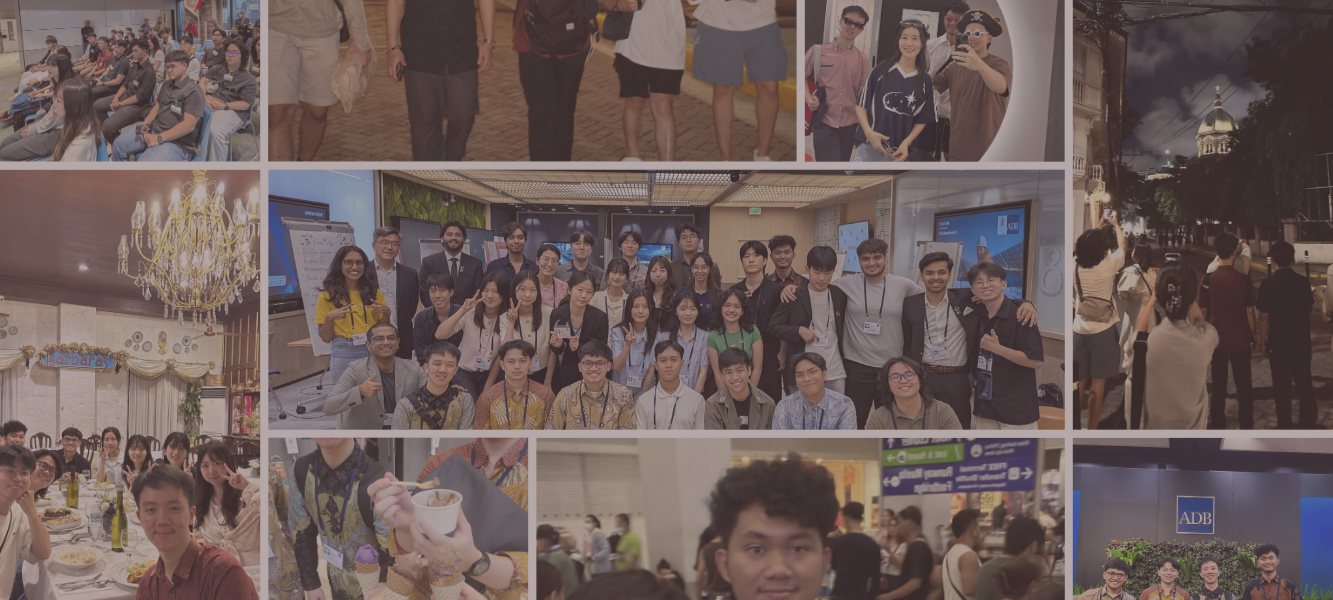
You know, the first thing that truly welcomed me to the Google Solution Challenge Finals in Manila wasn't the glitz of a grand stage or the thunderous applause I had daydreamed about. No, it was the far more humble, almost clinical scent of industrial-strength air conditioning. That sterile aroma, a smell that promised both focus and anxiety, mingled with the constant, fascinating hum of a dozen different languages swirling together. It was a veritable Tower of Babel, but for code. Ten teams, different nations, all speaking the universal dialects of Python and JavaScript, yet all whispering their own unique hopes.
Floating in that sea of ambition, I allowed myself to indulge in a heroic fantasy: I would be the one to carry the name of my nation, my university, onto that global stage. It was a beautiful, intoxicating thought. A thought that, as it turns out, was destined to be gloriously shattered in the most enlightening way possible.
Of course, beneath all that bravado, the old familiar ghost of imposter syndrome had come along for the ride. Surrounded by the best of the best, a little voice that pays rent to live in the back of my mind began to whisper, "Are you sure you belong here, kid?"
Act II: Of Dice, Demeanor, and a Grave Miscalculation
Funnily enough, that nagging ghost was exorcised not by a sudden burst of self-confidence, but by the disarming friendliness of the other contestants. The place was practically overflowing with goodwill, especially from two certain teams from Korea. I found myself spending more time building bridges than agonizing over my own doubts. It was during this networking spree that I met "J" and her team.
J carried herself with the quiet, unshakeable confidence of a chess master who is already five moves ahead of you. But what truly struck me was a wonderfully bizarre, humanizing detail: her apparent obsession with dice. She wore a necklace that spelled out "clice"—a visual pun, perhaps, on the word "dice." It was such a quirky, unexpected detail that, for a moment, I was more curious about her necklace than about the hackathon itself.
Armed with this image of a cool, confident innovator, I was half-expecting a presentation style worthy of a rock concert. What I got, however, was a classic case of "developer in the wild"—as socially effusive as a hibernating bear. When I saw their simple, straightforward demo, my first, unfiltered thought was, "Wait, that's it?" It was a profound miscalculation, a classic case of judging a book by its very, very quiet cover.
Act III: The Hotel Room War
You see, the real contrast, the real drama, wasn't playing out under the bright lights of the exhibition hall. It was brewing in the dim, chaotic confines of our hotel room on the final night. The place had descended into what could only be described as a tech startup that had exploded inside a pizza box. Two of my teammates, running on fumes and pure panic, were determined to pull an all-nighter, a kamikaze run of coding that nearly made them miss breakfast.
In the thick of this desperation, our team became a house divided. One member was dead-set on cramming in a flashy new AI feature. Another, bless his heart, proposed a strategy that landed with a thud in my gut: doing background checks on other teams to find weaknesses, to "sabotage" them. The idea felt less like strategy and more like sacrilege. It was a stark reminder that when the pressure is on, some people reach for a better tool, while others just reach for a bigger rock.
I remember thinking how bizarre it was. While I was out there finding community and kindness, my own team was back in the room, caught between blind ambition and questionable tactics. We were like a ship's crew arguing about polishing the cannons while the boat was taking on water.
Act IV: The WhatsApp Epiphany and a New Horizon
We didn't win. As they say, the bigger they are, the harder they fall, and my dream of waving that flag definitely took a tumble. There was that initial sting of disappointment, of course. But when I saw J's team ascend the stage to accept the "Most Social Impact" award, the sting was replaced by a resounding sense of clarity. It just felt… right.
But the true lesson, the real trophy, wasn't handed out on that stage. It arrived quietly, a week later, in a WhatsApp message from J. I had asked her about her philosophy. Her answer was an observation, not a lecture: "You know, whenever I see a great student CEO of a startup, I look them up on GitHub. I check their old repositories and find that so many of them started out as frontend developers."
Reading that, it was like a key turning a lock I didn't even know existed in my mind. The pieces slammed into place. I typed back, the realization flowing through my fingertips: "I think the biggest factor is that frontend forces you to develop empathy for other people (the users). That’s an essential skill for any leader."
That was the moment. She didn't teach me; our conversation sparked the lesson within me.
Let's be honest, winning is winning. A trophy is still a trophy, and I'd be lying if I said I didn't want one. But what I learned in Manila is that sometimes, the consolation prize is worth infinitely more than the grand prize. The defeat gave me a gift I couldn't have won otherwise: perspective. It was my first real taste of the international stage, and it fundamentally changed my palate.
I came home with a new creed. I learned that the shiniest tool in the box is just dead weight if you don't first understand the human heart it's meant to serve. And more often than not, the map to that heart can only be found when you dare to step off your own, well-trodden path and into the beautiful, chaotic, and eye-opening world of others. That, right there, was the real victory I brought home from Manila.